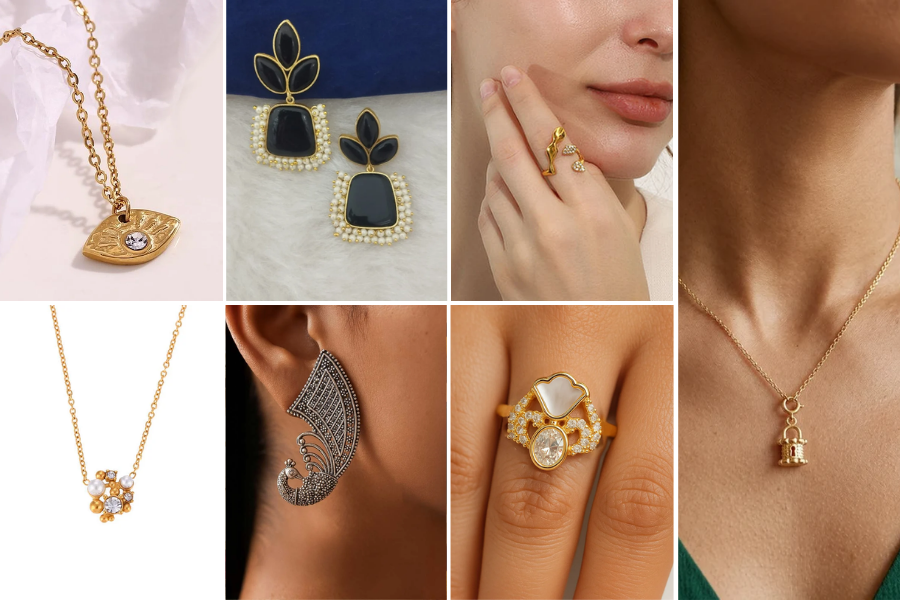


Everything You Need to Know About Artificial Jewellery in 2026

A few years ago, most people kept a small box of jewellery for special days and wore the same two or three pieces the rest of the time. That habit has changed. Artificial jewellery now sits alongside clothes, bags and shoes as something you pick to suit the day, the outfit and your mood, and it is priced in a way that makes that kind of variety realistic.
In 2026, the pull is coming from two directions at once: quiet, minimalist pieces for daily wear, and bolder statement jewellery for evenings and festive occasions. Many people are also mixing traditional and contemporary styles instead of keeping them apart.
This guide walks through the whole picture. You will find out what artificial jewellery actually is, how it differs from fine jewellery, how to judge quality before you buy, how to style the main categories, how to mix metals, how to look after your pieces, and how to build a collection that gets worn rather than left in a drawer.
What Is Artificial Jewellery and How Is It Different From Fine Jewellery?
Artificial jewellery is jewellery made from base metals, alloys and other non-precious materials rather than solid gold, platinum or silver set with natural gemstones. It is designed to look good, follow current trends and cost far less than precious-metal pieces.
You will see several terms used for it, and they overlap:
-
Fashion jewellery usually refers to trend-led pieces made for styling rather than for lasting value.
-
Imitation jewellery is a term widely used in India for pieces that resemble gold, silver or gemstone jewellery without using those materials.
-
Costume jewellery is the older Western term, often applied to statement pieces made to go with a particular outfit.
In everyday shopping, these labels are used loosely, and brands do not always define them the same way. What matters more is the construction of the actual piece, which is covered further down.
How it is generally made
Most artificial jewellery starts with a base metal or alloy that is cast, stamped or shaped into a design. The piece is then finished with plating, colour coating, polishing or enamel work, and decorated with beads, glass, synthetic stones or simulated gems. Processes and quality control differ from one manufacturer to another, which is why two similar-looking earrings can behave very differently after a few months.
Why someone might choose it over fine jewellery
The reasons are usually practical. You can own many more designs for the same budget. You can try a trend without a big commitment. You can wear a piece to a crowded event or while travelling without worrying much about loss. And you can match jewellery to outfits instead of wearing one set with everything.
Fine jewellery has its own strengths. It is made from precious materials, can be repaired and resized, and often holds some material value. The two are not rivals so much as tools for different jobs.
|
Factor |
Artificial Jewellery |
Fine Jewellery |
|
Materials |
Base metals, alloys, glass, synthetic stones, beads, plated or coated finishes |
Precious metals such as gold, silver or platinum, often with natural gemstones or diamonds |
|
Price |
Generally much lower |
Generally much higher, tied partly to metal and stone value |
|
Design variety |
Wide range, quick to follow trends |
More limited by cost; classic designs dominate |
|
Everyday styling |
Easy to rotate and match with outfits |
Often chosen as a few pieces worn repeatedly |
|
Maintenance |
Needs gentle handling; finish may wear with time, depending on construction |
Usually more durable, though it still needs cleaning and care |
|
Occasion suitability |
Suits daily wear, work, parties, festivals and many weddings |
Often preferred for milestones, heirlooms and investment buying |
A fair summary: artificial jewellery trades long-term material value for flexibility and affordability. Treat it as a styling accessory, not an investment, and you will rarely be disappointed.
Why Artificial Jewellery Is Becoming Popular in 2026

There is no single reason. Several habits have come together.
Affordability changes how people shop. When a pair of earrings costs a fraction of a fine-jewellery equivalent, buying becomes a casual decision. You can pick up something for a single wedding season or a new work wardrobe without a long deliberation.
Trends move quickly. Chunky chains, pearl accents, sculptural earrings and delicate layered pieces have all had their turn in recent years. Fast-moving jewellery trends are hard to follow with precious metals, but easy to follow with fashion jewellery.
Variety has become the point. Many shoppers now prefer owning a dozen different looks over two expensive ones. Jewellery is treated like part of the outfit, not a separate category kept for occasions.
Social media shapes taste. Creators show how a simple chain changes a plain tee, or how a pair of oversized earrings can carry a whole look. Seeing styling ideas in short videos makes people more willing to experiment, particularly with combinations they might not have tried alone.
Minimal and statement styles both have a place. Some people want a clean everyday set they never take off. Others want one dramatic piece for dinner. Artificial jewellery covers both without much compromise.
Traditional and contemporary styles are blending. A kada with a shirt, jhumka-inspired earrings with a blazer, or a simple chain under a kurta neckline are all common now. Strict rules about what goes with what have loosened.
Occasion dressing is more varied. With more events, dinners and festive gatherings across a year, owning pieces for each is more practical than relying on a small set of expensive items.
It is tempting to attach numbers to all this, but there is little reliable public data on it, so this guide sticks to what shoppers and stylists commonly observe.
How to Choose Artificial Jewellery for Everyday Wear
Daily-wear pieces face more demands than party pieces. They get put on in a hurry, worn for ten hours and tossed in a bag. A few checks make a real difference.
Comfort and weight. Heavy earrings can drag on the earlobe by mid-afternoon. If you plan to wear a pair all day, lighter designs or smaller sizes are usually easier. Try holding the earring in your palm; if it feels weighty, think about how it will feel after hours.
Size and proportion. A pendant that looks delicate in a photo might look tiny on a broad neckline, and a large cuff may swallow a slim wrist. Check dimensions in the product details and compare them with something you own.
Skin sensitivity. Some people react to certain metals, especially nickel, in earrings and rings. If your skin is sensitive, look for pieces whose material information is clearly stated and consider speaking to a doctor if you have a known allergy. Where details are missing, ask the seller.
Clothing compatibility. A simple rule is to look at your closet. If most of your tops are plain, a few interesting earrings will work hard. If your wardrobe is full of prints, quieter jewellery is easier to wear repeatedly.
Frequency of wear. A piece you will wear three times a week deserves more attention to finish and fastenings than one you will wear at a cousin's sangeet. Spend your attention where the use is highest.
Secure closures. Look for earring backs that sit snugly, clasps that close firmly and rings that hold their shape. A pretty piece with a loose clasp becomes a lost piece.
Ease of maintenance. Highly textured designs and pieces with many small stones can collect dust and cosmetics. Smooth, simple designs are generally easier to wipe clean.
Versatility. Before buying, picture three outfits the piece could go with. If you can only think of one, it may be better kept for later.
What Materials and Finishes Are Commonly Used in Artificial Jewellery?
The words on a product page can seem like a foreign language. Here is what the common ones usually mean in plain terms. Keep in mind that construction differs by product and by brand, so the same name does not guarantee the same quality.
-
Brass: A copper-zinc alloy often used as a base because it is easy to shape and takes plating well.
-
Alloy: A mix of metals. The exact blend varies widely, so this word alone tells you very little. Check whether the seller gives further detail.
-
Stainless steel: Often chosen for its resistance to tarnish and its sturdiness. Grades differ, so it is worth reading the description.
-
Copper: Used as a base or in its own right; it can develop a patina over time, which some people like and some do not.
-
Acrylic: A lightweight plastic. It allows bold shapes and bright colours without much weight, which suits oversized earrings.
-
Glass: Used in beads and stones to give sparkle or colour. Glass can chip or crack if knocked.
-
Synthetic stones: Lab-made or manufactured stones, including cubic zirconia and similar materials, designed to resemble natural gemstones.
-
Beads: Made from glass, resin, acrylic, wood or other materials, and strung or set into a range of designs.
Finishes
-
Gold-toned and silver-toned: These describe the colour, not the content. A gold-toned piece looks gold but may be coated, plated or simply polished in a gold shade.
-
Gold-plated: A thin layer of gold or gold-coloured metal applied over a base. Plating thickness, process and base metal vary by manufacturer, so longevity differs. Do not assume two gold-plated items will wear the same way.
-
Oxidised finish: A darkened, antique look often used in traditional-inspired designs.
-
Rhodium or similar coatings: Sometimes used to give a bright silver-like look.
If a listing says only "metal" or leaves out the finish entirely, treat that as a prompt to ask questions before buying.
How to Identify Quality Artificial Jewellery Before Buying
Buying online means you cannot always hold the piece first. These checks help you judge from photos, descriptions and reviews.
|
What to check |
What to look for |
|
Finish and surface |
Smooth, consistent surface without visible pits, rough patches or flaking in close-up photos |
|
Plating or colour |
Even tone across the whole piece, including edges and the back |
|
Stone setting |
Stones sit flush and are held by neat prongs or settings, with no visible glue marks |
|
Clasps and hooks |
Look sturdy and close fully; lobster clasps often hold better than very small spring rings |
|
Ring adjustment |
Adjustable bands should open and close smoothly and hold their shape |
|
Edges and workmanship |
No sharp edges, rough joins or uneven soldering |
|
Weight and comfort |
Weight in grams is stated where possible; earrings especially should suit long wear |
|
Product description |
Clear material and finish details, dimensions and care notes |
|
Seller or brand |
Transparent contact details, return policy and consistent product information |
|
Reviews |
Reviews that mention wear over time, not only first impressions |
|
Care instructions |
Specific guidance from the maker rather than generic advice |
A few extra habits help.
Zoom into photos. Look at the back of a pendant and the inside of a ring. Neat work shows up in places most people ignore.
Read reviews with a filter. Comments such as "looks great" tell you little. Reviews that mention a month of use, how the finish held, or whether the clasp stayed secure are far more useful.
Look for consistency. A listing with clear photos from several angles, a written description and size details usually suggests the seller has thought about the buyer's questions.
Check return terms before you order. Even careful shoppers occasionally receive something that looks different in person.
How to Style Hoop Earrings for Effortless Everyday Looks

Hoops are one of the easiest shapes to wear because they suit nearly every face shape and most outfits. If you are browsing hoop earrings for women, size is the first decision, and it changes how the whole look reads.
Small hoops sit close to the earlobe and work as a quiet daily option. They suit offices, college days and anyone who wears glasses or has several piercings.
Medium hoops are the most flexible. They frame the face without taking over, and they pair well with open collars, ponytails and shoulder-length hair.
Large hoops make a stronger statement. They look good with simpler necklines, slicked-back hair and minimal other jewellery. If you wear them to work, check that they are light enough to be comfortable.
Styling by setting
-
Casual: Medium gold-toned hoops with a white tee and jeans is an easy combination. Add a slim chain if you like, but keep the rest minimal.
-
Office: Small, smooth hoops with a blazer or shirt look neat and professional. Avoid very dangly designs in meetings where you will be moving around a lot.
-
Western outfits: Chunky or twisted hoops pair well with leather jackets, tailored trousers and slip dresses.
-
Indian outfits: Small or medium hoops, especially those with beadwork or oxidised detail, work well with a straight-cut kurta or a cotton saree. For heavier festive outfits, larger decorated hoops can replace jhumkas.
-
Minimalist styling: Thin, plain hoops with no other earrings or a single small stud in the second piercing.
-
Statement styling: Oversized or textured hoops, worn with hair pulled back and no necklace, so the earrings get the attention.
When in doubt, let the hoops lead and let everything else step back.
Why Stud Earrings Are a Timeless Choice for Everyday Wear

Studs have one big advantage: they stay put. They do not tangle in scarves, swing into hair or catch on collars, which makes them reliable for long days. That is why many people own several pairs and rarely rotate them out.
A pair of silver stud earrings, for example, fits easily into a minimalist routine. They work with a formal shirt, a casual hoodie or a cotton kurta without competing for attention.
How studs work in different settings
-
Office and professional looks: Small round or geometric studs in a plain finish look tidy and unobtrusive.
-
Casual outfits: Studs with a bit of character, such as a small flower, star or pearl-style design, add interest without effort.
-
Traditional outfits: Slightly larger studs with stones or a kundan-inspired design can complement a salwar suit or a saree when you want something less heavy than jhumkas.
Choosing size and colour
Size depends on how noticeable you want them to be. Tiny studs are close to invisible from a distance, while medium ones read as a deliberate choice. If you are buying one pair to wear daily, a size that is visible but not heavy is a sensible middle ground.
For colour, think about your skin tone, your other jewellery and what your wardrobe leans toward. Silver-toned studs often look crisp with cool shades such as blue, grey and black, and with white. Gold-toned studs tend to feel warmer and sit well with earthy colours, cream and olive. These are tendencies, not rules, and it is fine to ignore them if something looks good on you.
How to Style Pendant Necklaces for Different Occasions

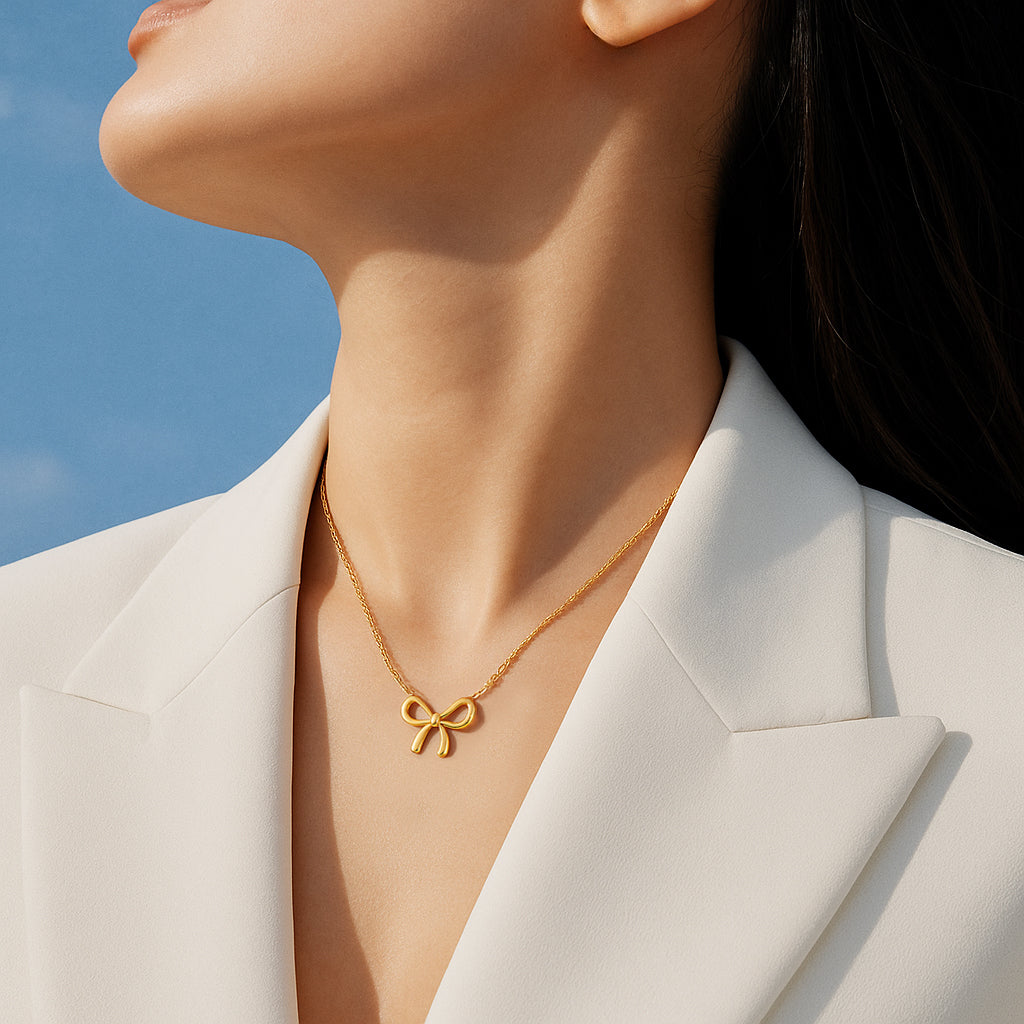
A pendant is a good place to start if you are building a small necklace collection. A gold plated pendant necklace on a fine chain can sit under a shirt collar at work and still look intentional at dinner. Keep in mind that gold-plated pieces vary by maker, so check the description for details on materials and finish.
Everyday and workwear
Choose a small pendant, such as a tiny initial, a simple bar or a small stone, on a fine chain. Aim for something that sits near the collarbone, where it does not catch on your laptop or move around much.
Casual outfits and dresses
With a tee or a casual top, a slightly bigger pendant works fine. With dresses, let the neckline decide: a plunging V-neck suits a longer pendant that follows its shape, while a scoop neck works with a shorter drop that fills the open space.
Indian ethnic wear
Pendants are not only for Western clothes. A small pendant on a short chain can go with a high-neck kurta, and a slightly longer piece can sit nicely over a V-neck suit. For heavier festive outfits, pair a pendant with statement earrings and leave your hands lightly decorated.
Matching length to neckline
|
Neckline |
Pendant length that tends to work |
|
Crew neck |
Longer chain that rests on top of the garment |
|
V-neck |
A pendant that follows the line of the V |
|
Scoop neck |
A shorter chain sitting just above the neckline |
|
Collared shirt |
A short chain under the collar, or a long chain over it |
|
High neck |
A long pendant over the garment |
Choosing pendant size
A good test is to hold the pendant against your chest in a mirror. If it disappears, go up a size. If it dominates the outfit, go down. Small and medium pendants are easiest for layering because they leave room for other chains.
How to Wear Choker Necklaces for a Modern Jewellery Look

A choker sits close to the base of the neck. It can look sleek, edgy, romantic or traditional depending on the design, which is why choker necklaces for women have stayed in rotation through several trend cycles.
Common styles
-
Chain chokers: Simple, clean and easy to wear with most things.
-
Pearl or bead-style chokers: Softer in feel, often paired with dresses and festive outfits.
-
Stone or pendant chokers: A central stone or drop adds a focal point.
-
Traditional chokers: Kundan-inspired or oxidised designs that suit sarees, lehengas and heavier ethnic wear.
Styling ideas
Casual: A thin chain choker with a t-shirt or tank top keeps things relaxed.
Party: A pearl-style or stone choker with a strapless or off-shoulder dress frames the neck and collarbone well.
Ethnic: A traditional choker with a deep or boat neckline can replace a longer necklace set, giving a polished look without the weight.
Neckline considerations
Chokers tend to look best with necklines that leave the neck open: strapless, off-shoulder, halter, square or low V-necks. High collars and polo necks usually compete with them, so skip the choker or choose a longer chain instead.
Layering and keeping the rest simple
A choker can be paired with a longer pendant chain for a layered look, as long as the two differ in thickness or style. When your choker has a lot going on, keep the earrings small and skip the bracelets. When the choker is plain, you have more freedom elsewhere.
How Layered Necklaces Create a Balanced and Stylish Look

Necklace layering means wearing two or more necklaces at different lengths so that each one is visible. Done well, layered necklaces add depth and personality. Done carelessly, they tangle and clutter.
Choosing lengths
A simple approach is to space chains roughly two to three centimetres apart, so each has its own line. A short chain near the collarbone, a medium one a bit lower, and a longer pendant can form a clean progression.
Combining delicate and statement pieces
Pairing a fine chain with one chunkier piece gives the eye somewhere to land. Two equally bold chains tend to fight each other. If you are unsure, begin with a fine chain and a single pendant, then add a third piece only if the look needs it.
Matching metals
Stick to one dominant metal tone, either gold-toned or silver-toned, for a cohesive result. If you want to mix, see the section on mixed-metal styling below.
Necklines and clutter
V-necks and scoop necks give the most room for layers. High necks work best with a longer chain over the garment. Crew necks can handle two chains but may look crowded with three.
When to stop
A useful test: look in the mirror and check whether you can see each chain clearly. If they merge into a single blur, remove one. Two or three necklaces are enough for most people.
How to Choose the Right Bracelet for Your Everyday Style

Bracelets are easy to wear and easy to overdo. The right choice depends on your daily routine more than anything else.
Minimal bracelets
A thin chain, a slim bangle or a delicate charm bracelet fits almost any outfit. For many people, a simple hand bracelet for women is the first piece they add after earrings, because it needs little thought and goes with most outfits.
Stackable bracelets
Stacking works best when pieces share something: the same metal tone, a similar width or a common motif. Mix textures, such as a smooth bangle with a chain, to add interest without chaos. Three to five pieces is a comfortable range for most wrists.
Statement bracelets
Wide cuffs, bold link chains and embellished bangles do the work of a necklace and ring combined. If you wear one, keep other jewellery quieter.
Casual and office styling
For the office, choose bracelets that do not clink loudly when you type. Slim chains and smooth bangles are quieter than heavy charms. For weekends, you can stack more freely.
Matching with watches
If you wear a watch, consider letting it be the main wrist piece. A slim bracelet on the same wrist, in a similar metal tone, works well. Alternatively, wear the watch on one wrist and the bracelet on the other.
Size and fit
Measure your wrist with a soft tape and compare it with the product's dimensions. A bracelet should move slightly but not slide off your hand. Too tight is uncomfortable; too loose gets caught and may be lost.
Coordinating with rings and earrings
Match the metal tone across the bracelet, rings and earrings, or deliberately mix tones in a controlled way. If your earrings are large, keep bracelets simple, and vice versa.
Why Adjustable Rings Are a Practical Choice for Everyday Wear

An adjustable ring has an open band that can be gently widened or narrowed to fit a range of finger sizes. This makes it useful when you are unsure of your size, when your fingers change with weather or time of day, or when you buy a ring as a gift.
How they work
The band usually has a gap at the back, so the ends can be pressed closer together or pulled slightly apart. Adjust gently and avoid doing it repeatedly, because bending metal back and forth may weaken it over time, depending on the material.
When they are useful
-
You are ordering online and do not know your ring size.
-
Your fingers swell in hot weather.
-
You want to wear the same ring on different fingers.
-
You are buying for someone else.
Styling
A single adjustable gold ring on the index or ring finger looks clean and deliberate. Thin bands work well in groups of two or three, while a ring with a small stone or a sculptural shape can stand on its own.
Stacking
For stacking, choose rings with a similar band thickness, or vary them on purpose: one thin, one medium, one with a small detail. Spread them across fingers instead of crowding one.
Matching with other jewellery
Keep the ring metal consistent with your bracelet and earrings when you want a coordinated look. If your bracelet is chunky, use slimmer rings and the other way around.
How to Style Statement Rings Without Overdoing Your Look

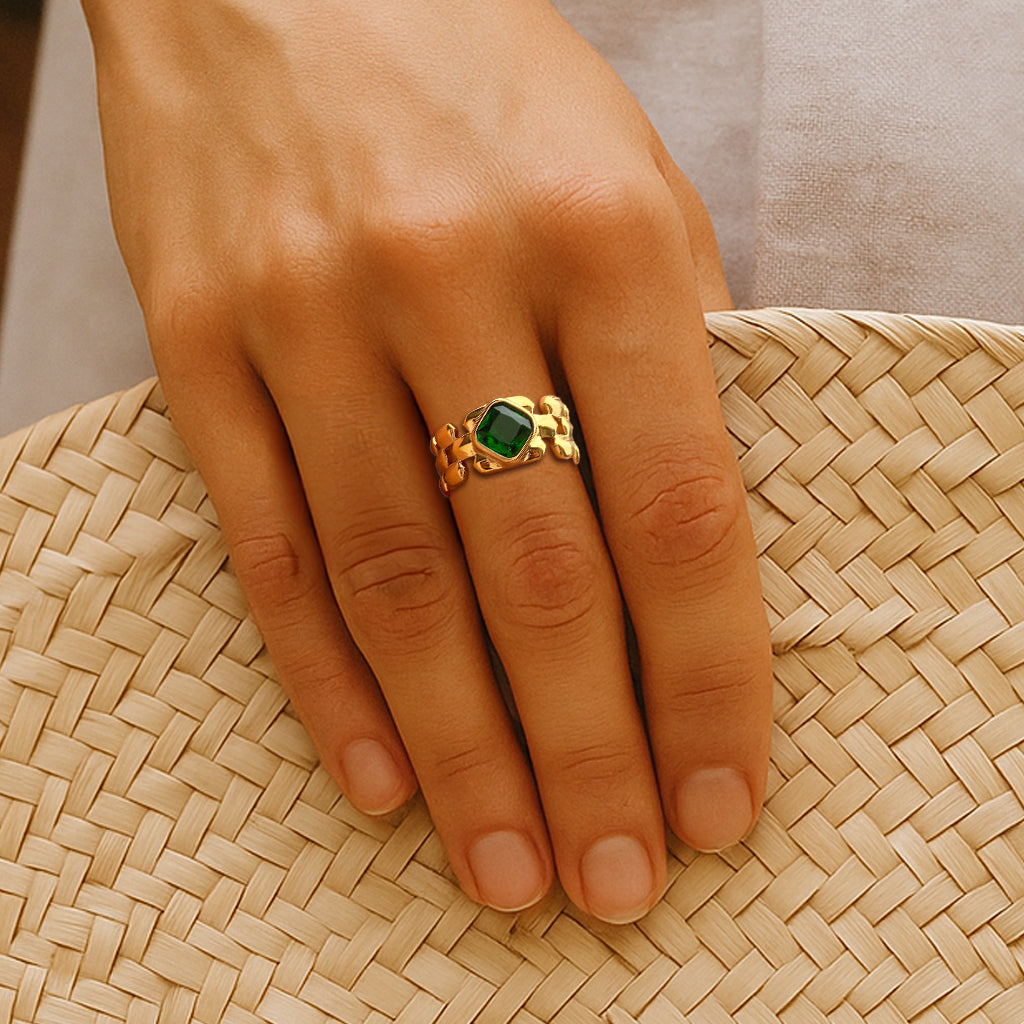
A statement ring is a bold, eye-catching piece: a large stone, a sculptural shape, a wide band or a cocktail-style design. It does a lot of work on its own, which is why it needs space.
Pick one focal point
Choose either a statement ring or a statement necklace, not both at full volume. When one piece is the star, the others should support it with simple shapes and a consistent metal tone.
Balance with other jewellery
If you wear a big ring on one hand, keep the other hand bare or lightly decorated. Small studs or thin hoops, a slim chain and a simple bracelet work well alongside.
Occasions
-
Parties and dinners: A bold ring with a plain dress or a monochrome outfit stands out well.
-
Ethnic outfits: A kundan-inspired or stone-set ring suits sarees and anarkalis, especially when your earrings are modest.
-
Western outfits: A chunky metal ring with a blazer or a leather jacket looks relaxed and confident.
Stacking versus single statement
Stacking spreads attention across several small rings, while a single statement ring concentrates it. Both are valid. Decide which you prefer for the day, and avoid mixing both on the same hand.
How to Choose Artificial Jewellery Based on Your Outfit and Occasion
The same earrings can feel right at lunch and wrong at a wedding. Think of the occasion as a brief: how formal is it, how long will you wear the piece, and what is the outfit already doing?
|
Occasion |
Recommended Jewellery |
Styling Approach |
|
Everyday |
Small studs or hoops, a fine pendant, a slim bracelet |
Keep it light and repeatable; pick pieces you do not have to think about |
|
Office |
Neat studs, a delicate chain, a simple ring or watch-friendly bracelet |
Quiet shapes, low noise, one or two pieces at most |
|
College or casual outings |
Medium hoops, layered chains, stackable rings |
Play with texture and stacking; it is the place to experiment |
|
Dinner dates |
A pendant or choker with drop earrings or a standout ring |
Choose one feature and let the rest recede |
|
Party |
Statement earrings, a bold choker or cocktail ring |
Go bolder, but still pick a single focal area |
|
Wedding |
Traditional-inspired sets, chokers, jhumkas, kada |
Match the outfit's colour and weight; coordinate metal tones |
|
Festival |
Oxidised, kundan-inspired or beadwork pieces with a kada |
Colourful and layered is fine; comfort matters for long days |
A few practical notes
Weddings often mean eight hours or more of wear. Choose lighter earrings even if they are less dramatic, and test heavier sets at home beforehand.
Traditional and ethnic occasions are where artificial jewellery can be especially useful. Sets, chokers and jhumkas can be matched to specific outfits without a large outlay. Mixing a traditional piece with a modern one, such as a kada with a simple chain, is increasingly common.
Dinner and party looks tend to work best when the neckline, earrings and necklace do not all compete. If the neckline is detailed, let earrings carry the look.
How to Mix Gold-Toned, Silver-Toned and Mixed-Metal Jewellery

Can you wear gold and silver tones together? Yes. The old rule against it has largely faded, and many stylists now treat mixed metals as a deliberate choice. That said, it is a matter of taste, and matching metals is still a perfectly good approach.
Making a mixed look feel intentional
-
Choose a dominant tone. Let roughly two-thirds of your jewellery be gold-toned, for example, with the rest silver-toned.
-
Use a bridge piece. A bracelet or ring that combines both tones helps tie the two together.
-
Repeat the mix. If you wear a silver-toned necklace with a gold-toned ring, add a second small piece of each, such as a silver stud and a gold bracelet, so the combination looks planned.
-
Match your clothing. Warm shades such as cream, olive and terracotta often flatter gold tones. Cool shades such as grey, navy and white can suit silver tones. These are tendencies, and plenty of people wear them the other way round.
Examples of balanced combinations
-
Silver-toned studs, a gold-toned pendant on a fine chain and a two-tone bangle.
-
A gold-toned kada with silver-toned hoops and a simple ring in either tone.
-
A layered necklace with one silver-toned chain and one gold-toned chain at different lengths, with plain studs.
Avoiding clutter
Mixing is easiest when the pieces themselves are simple. A mix of many bold shapes in two metals can look busy. If you are unsure, start with fine chains and small pieces, then add contrast gradually.
How to Care for Artificial Jewellery and Maintain Its Finish
Care matters more with artificial jewellery than many people expect, because the finish is often the first thing to go. Responses to water, sweat and chemicals differ by material and construction, so treat the points below as general habits and follow the manufacturer's instructions for each piece.
Keep it away from moisture where possible. Take pieces off before bathing, swimming or washing your hands for long. Some finishes may tolerate occasional splashes, others may not.
Put jewellery on last. Perfume, hairspray, body lotion and sunscreen can affect plating and some stones. Apply them first, give them a minute to dry, and then put on your jewellery.
Wipe after wearing. Sweat can leave residue and, in some cases, contribute to dulling. A soft, dry cloth is a simple way to clean a piece before storing it.
Clean gently. For most pieces, a soft cloth is enough. If something needs more, check the care instructions first, because certain materials, such as beaded or glued items, may be damaged by water or mild soap.
Avoid harsh chemicals. Bleach, strong cleaners, abrasive polishes and acetone can damage finishes and stones. Do not use them unless the maker says to.
Store pieces separately. Small zip pouches, soft-lined boxes or compartments keep chains from tangling and stones from scratching. Dry storage, away from damp bathrooms, is generally better.
Keep chains and bracelets from knotting. Fasten clasps before storing, or hang necklaces on a hook.
Follow product-specific advice. Some brands include care cards or website guidance. If your piece came with instructions, they take priority over any general tip, including those above.
Common Mistakes to Avoid When Buying Artificial Jewellery
Almost everyone makes at least a few of these. None are disasters, but knowing them saves money.
-
Choosing only on appearance. A great photo says little about weight, finish or comfort. Read the description too.
-
Ignoring material information. If the listing does not say what the piece is made from, ask or look for a different option.
-
Overlooking size and fit. Check ring size, bracelet length, chain length and earring dimensions.
-
Buying pieces that do not suit your wardrobe. A beautiful piece that clashes with everything you own will mostly sit unused.
-
Overlooking workmanship. Rough edges, loose stones and uneven finishes are easier to spot in close-up photos than people expect.
-
Skipping reviews. Reviews that mention wear over a few weeks tell you much more than first impressions.
-
Buying too many trend-specific pieces. Trends are enjoyable, but a drawer full of one season's pieces can be frustrating next year.
-
Not checking care instructions. A quick look at care notes before buying helps you judge whether a piece fits your routine.
-
Expecting it to behave like fine jewellery. Artificial jewellery needs gentler handling. Expecting it to be indestructible sets you up for disappointment.
-
Not considering how often you will wear it. A daily piece should be chosen with more care than something for a single event.
Building a Versatile Artificial Jewellery Collection in 2026
The easiest way to build a collection you will actually use is to begin with the pieces that appear in most of your outfits and add the more distinctive ones later.
Start with everyday basics
-
Everyday studs. One pair in gold-toned and one in silver-toned covers most days.
-
Hoop earrings. A medium pair adds a second everyday option.
-
A pendant necklace. Choose a size and chain length that suit your usual necklines.
-
A simple bracelet. Something slim you can wear with a watch or without.
-
An adjustable ring. A practical addition that avoids sizing worries.
Add the next layer
-
A choker. Useful for open necklines and festive outfits.
-
A layered necklace set. Start with two chains that work well together before buying more.
-
A kada. A gold plated kada is one of the most useful pieces in an Indian wardrobe, working with kurtas, sarees and even shirts. As always, check the product description for material and finish details.
-
A statement ring. Save this for when you know your style.
Prioritise versatile pieces first
Before adding anything trend-led, ask yourself three questions: does it match at least three outfits I already own, is it comfortable for the time I will wear it, and would I still like it in a year? If the answer to all three is yes, it is a safe buy. If not, treat it as a fun extra and keep the budget modest.
Amalfa's range covers many of these categories, which can make it easier to build a coordinated collection in one place, but the same logic applies wherever you shop.
Conclusion
Artificial jewellery gives you room to experiment, switch between minimal and bold looks, and dress for different occasions without a large investment. What makes the difference is not following every trend but buying with care: checking materials and workmanship, thinking about comfort, and choosing pieces that suit your wardrobe, your lifestyle and the events you attend. A collection built that way will look cohesive, get worn often and stay useful long after any single trend has passed.
Frequently Asked Questions
Is artificial jewellery good for everyday wear?
Yes, for many people it is. Lightweight, simple pieces with secure fastenings usually work best for daily use. How well a piece holds up depends on its materials and finish, so check the description and follow the care instructions.
How long does artificial jewellery usually last?
There is no single answer. Lifespan depends on the materials, the plating or coating, how often you wear it and how it is stored. Pieces worn daily and exposed to moisture or perfume typically show wear sooner than those kept for occasional use.
What is the difference between artificial jewellery and fine jewellery?
Fine jewellery uses precious metals such as gold, silver or platinum, often with natural gemstones. Artificial jewellery uses base metals, alloys and other materials, usually with plated or coated finishes, and costs less.
How can I make artificial jewellery last longer?
Put it on after perfume and lotion, take it off before bathing or sleeping, wipe it with a soft cloth after wearing, and store it dry and separately. Follow any instructions from the maker.Can I wear artificial jewellery with traditional outfits?
Absolutely. Jhumkas, chokers, kadas, oxidised pieces and kundan-inspired designs are widely worn with sarees, suits and lehengas. Matching the weight of the jewellery to the outfit helps.
How should I store artificial jewellery?
Keep pieces in a dry place, in separate pouches or compartments, with clasps fastened to prevent tangling. Avoid bathrooms and humid spots.
Can gold-toned and silver-toned jewellery be worn together?
Yes. Choose one tone as the main one and use the other as an accent, or wear a piece that includes both to link them.
What should I check before buying artificial jewellery online?
Look for clear material and finish information, size details, close-up photos, honest reviews, care instructions and a clear return policy.