

Karwa Chauth Jewellery: What to Wear From Sargi to Moonrise

The short answer: wear light, comfortable jewellery from sargi through the fast, and save your one statement piece for the evening puja. Karwa Chauth is a long day. You're up before dawn, you go without food and water until the moon is out, and the photos happen at the very end. Jewellery that works for the whole day is planned in layers, not put on all at once.
In 2026, Karwa Chauth falls on Thursday, 29 October in India. Moonrise changes from city to city, often by half an hour or more, so check your local panchang for the exact time. Here's how to dress for each part of the day.
Before dawn: jewellery for sargi
Sargi is eaten in the dark, half-awake, usually in a simple kurta. The jewellery you put on now is the jewellery you'll have on for the next 14 hours or so, so choose it for comfort first.

- Small earrings you forget you're wearing. Studs or slim huggies. Save the drops for later.
- Your mangalsutra, or a lighter version of it. A mangalsutra bracelet keeps the symbolism without a pendant swinging around while you cook or work.
- One ring. Your hands will be busy with the thali, mehendi touch-ups and the sieve later. More rings can wait.
A pair like the Noor Luxe Pearl Drop Earrings works well here. The crystal stud sits on its own in the morning, and the detachable pearl drops go on in the evening. You change the earring, not the whole look.
Through the fast: keep it light
An empty stomach makes small irritations feel big. A heavy earring tugging at your lobe, a choker pressing on your throat, or a clasp catching your hair are easy to ignore on a normal day. On Karwa Chauth they wear you down. During the day:
- Skip anything that pulls on the ear. Large jhumkas and chandbalis come out in the evening.
- Keep the neck free. If you love a choker, put it on after 4 pm.
- Be careful with perfume, which is often sprayed generously on festive days. Spray it before your jewellery goes on, not over it. Perfume and plated pieces don't mix well.
If your skin reacts to some metals, this is the day it will show, simply because you're wearing everything for so long. Hypoallergenic, nickel-free pieces are the safer choice for the hours you have them on.
Evening puja: add your one statement piece
Most women dress fully between 4 and 5 pm, before the evening puja and katha. This is when the big pieces come out. The rule that keeps a festive look from tipping into too much: let one thing lead. Either the earrings or the necklace is the star, not both.
If you're wearing a red or maroon saree
Let the earrings lead. Something with colour and movement, like the Gajmohini Statement Earrings (elephant motifs with red, pink and turquoise stones) or the crescent-shaped Neelambari Chand Earrings, does the work on its own. Leave the neck bare or wear a fine chain, so the zari border of the saree has room to show.
If you're wearing a lehenga or a heavy anarkali
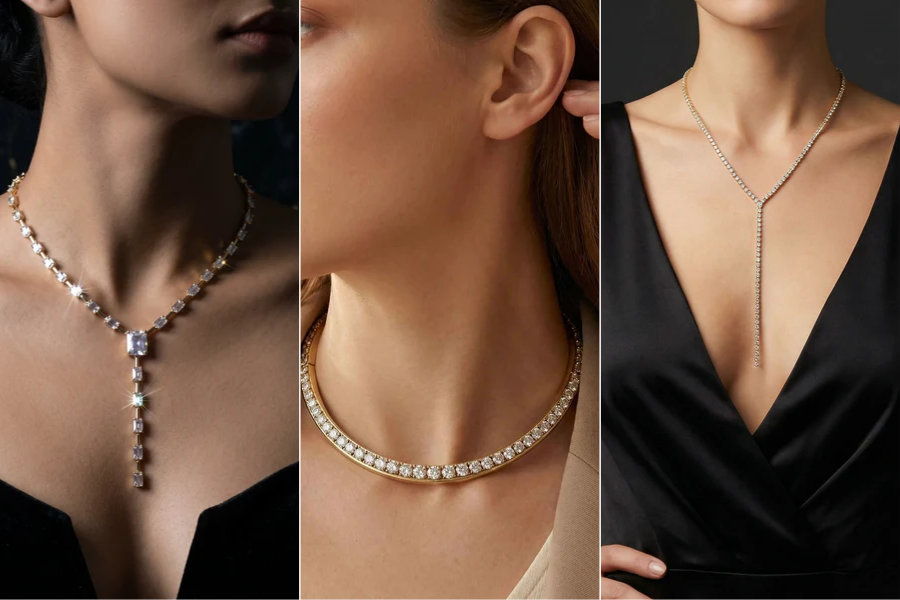
Now the necklace can lead. A choker sits neatly above a lehenga blouse. The Averisse Choker Set comes with matching earrings, so the pairing is already done. For something lighter, the Nira Multicoloured Choker adds colour without much weight. Keep the earrings small.
If you're wearing a suit, or a fusion outfit
Plain suits and Indo-western sets look sharp with one bold piece and nothing else. Try the Veyara Peacock Jhumka Earcuff, or a cocktail ring like the Riwaayat Statement Ring (pearl-edged petals around a black centre stone) on the hand that holds the thali.
Gold, silver or both?
Gold tones sit naturally with red, maroon, orange and mustard. Antique silver works with pastels, ivory and deep green. If you can't decide, choose dual-tone. Many of our festive pieces, like the Hastini Dual-Tone Bangles, mix antique silver with warm gold, so they go with your gold bangles and your silver toe rings at the same time.
The practical bits nobody mentions
- The sieve and the thali need two free hands. Stacked rings and loose bracelets catch on the chalni mesh. Wear your statement ring on the right hand and keep the left simple.
- Dupattas snag. Ear cuffs, chandelier earrings and prong-set stones catch on net and organza. If your dupatta goes over your head for the puja, choose earrings with smooth backs and closed settings, or pin the dupatta behind the ear.
- Bangles are noisy and that's fine, but a full stack makes it hard to pour water from the karwa (the clay pot used in the puja) gracefully. Two to four bangles plus your chooda is plenty. The adjustable Varnaya Bangles slide on and off without a struggle.
- Your mangalsutra is part of the ritual. If you've switched to a bracelet for the day, many women still wear their traditional mangalsutra for the puja itself. Put it in your bag in the morning so you're not hunting for it at 7 pm.

Moonrise: jewellery that shows up in photos
The moment everyone photographs happens outdoors, in the dark, on a phone. Two things help.
Choose stones that catch the light. Faceted crystals and CZ throw back the little light there is, while flat metal turns grey in the dark. The Rhea Classic CZ Choker or the Harper Mixed Cut Hoops read clearly even in a quick flash photo.
Earrings beat necklaces in close-ups. Most moonrise photos are faces looking through the sieve, so the necklace is usually out of frame. If you only have budget or energy for one new piece this year, make it the earrings.

Your first Karwa Chauth?
Many newlyweds re-wear part of their wedding look: the chooda, the red, sometimes the lehenga with a different blouse. That's a lovely idea. The only change worth making is weight. Your bridal set was chosen for a few hours of photos, not a full day without water. Keep the chooda and the mangalsutra, then swap the heavy bridal necklace for a choker and a pair of statement earrings. You'll still look like a bride in the photos, and you'll feel much better by evening.
If your husband is wondering what to give you, point him to our gifts for wife edit, with festive earrings, bangles and a mangalsutra bracelet, or to our separate guide on Karwa Chauth jewellery gifts.
After the fast: pieces you'll wear again
The best festive buys don't go back into the box for a year. Before you buy, ask whether the piece will work at a Diwali party next week, at a friend's wedding in December, or with a white shirt on a Monday. Pearl drops, a slim choker and a single statement ring all pass that test. A matching bridal-style set usually doesn't.
One customer review of the Noor Luxe Pearl Drops puts it simply: "Elegant, light and endlessly versatile. The stud is perfect for everyday and the pearl drop makes it special."
Quick look builder
- Red silk saree: statement earrings (chandbali or elephant drops), a bare neck or a fine chain, your chooda or 2–4 gold bangles, and one ring.
- Lehenga or heavy anarkali: small studs or huggies, a statement choker, bangles and one statement ring.
- Plain suit or Indo-western: a jhumka ear cuff, a bare neck and one cocktail ring.
- Pastel or ivory: antique silver or pearl drops, an optional dual-tone choker and dual-tone bangles.
Most of the pieces in this guide are under ₹2,500. Browse the full Modern Ethnic and Wedding and Festive edits, or see our mangalsutra styles.
Frequently asked questions
What jewellery is traditionally worn on Karwa Chauth?
The traditional solah shringar pieces include a mangalsutra, bangles or chooda, earrings, a nose pin, a maang tikka, rings, an anklet and toe rings. Few women wear all of them today. Most choose the mangalsutra, bangles and earrings, and then add one statement piece.
Is heavy jewellery necessary for Karwa Chauth?
No. Because you're fasting all day, lighter pieces are the more comfortable choice. Wear your heaviest piece only for the evening puja and moonrise, when you'll be seen and photographed.
Can I wear silver or oxidised jewellery on Karwa Chauth?
Yes. Antique silver and dual-tone pieces suit pastel, ivory and green outfits especially well. If you want gold in the look for tradition, dual-tone pieces let you wear both.
What should a newly married woman wear on her first Karwa Chauth?
Many brides re-wear their chooda and wedding colours. Keep the mangalsutra and chooda, and replace a heavy bridal necklace with a lighter choker and statement earrings, so you stay comfortable through the fast.
How do I look after gold-plated jewellery after the festival?
Wipe each piece with a soft dry cloth, keep it away from perfume and water, and store it in a closed pouch or box, one piece per pouch. Anti-tarnish coatings slow fading, but they don't stop it forever, so good storage still matters. Our guide on preventing gold-plated jewellery from tarnishing has more detail.
More Karwa Chauth reading: choosing earrings · choosing a ring for your wife · 6 things to check before you buy.